
The collector's edition
How to Store Manga Volumes and Keep Them in Good Condition
A manga volume can look like an ordinary paperback until you notice yellowed pages, wavy paper or a creased spine. Then storage is no small matter. A well-preserved volume is more enjoyable to read, looks better on the shelf and retains its value—especially if it is an out-of-print edition, a complete series or a hard-to-find volume.
There is no magic box or must-have accessory that suits every manga collection. The best approach depends on whether the volumes are for everyday reading, whether you are preserving first editions or simply want your favorite series to stay in excellent condition. A few basic rules work in almost every case, though.
The biggest threats to a manga collection
Light, moisture, heat and improper storage cause most damage. It usually does not happen all at once; it builds up slowly. That is why a problem often becomes noticeable only when it is already difficult to fix.
Direct sunlight fades colorful covers and spines. The change may not be immediately visible on white or light-colored editions, but after a few months the difference between a volume left by a window and one on an interior shelf becomes obvious. UV rays age paper and ink, so a display cabinet in direct sun all day is not a good long-term place for manga.
Moisture is even more insidious: pages wrinkle, the adhesive in the spine weakens, and conditions for mold develop. The opposite problem exists too—an excessively dry and hot environment can make paper brittle. Do not store volumes in a basement or attic, next to a damp exterior wall or directly above a radiator.
Dust is not just a cosmetic problem. If it accumulates along the top edge of the pages, it can leave grayish marks and hold moisture. Cigarette smoke, scented candles and cooking odors also seep into paper. The smell of smoke often lowers the value of an otherwise well-preserved collector’s volume.
How to arrange manga volumes on a shelf
The safest choice is to arrange them upright on a sturdy shelf, away from windows and heat sources. The volumes should be packed closely enough not to lean, but not so tightly that you have to pull them out by the top of the spine.
Leave a little room at the end of the row. That way, you can grip the book from the sides instead of pulling it out with one finger from above. Over time, that motion creases and loosens the spine, especially on thicker omnibuses and volumes with heavier paper.
Bookends or sturdy supports are useful when the shelf is not full. Do not press heavy decorative objects against the covers. A figurine in front of the series may look good in a photo, but if it constantly touches the volumes or gets in the way when you take them out properly, it creates an unnecessary risk.
Avoid tall horizontal stacks unless the arrangement is temporary. A few thin volumes will not suffer over a week, but during long-term storage their weight puts pressure on the covers and spines of the books below. Large art books and heavy deluxe editions are an exception: horizontal storage may suit them better, provided the stack is low and level.
Do not press volumes against the back wall
Leave a small air gap between the books and the wall, especially if it is an exterior wall. Cold walls can collect condensation during certain seasons, without it being immediately visible. If the shelf is in a closed cabinet, open it periodically to prevent stale air from building up.
A wooden shelf is perfectly suitable if it is clean, dry and sturdy. If the new furniture still smells strongly of varnish, paint or glue, wait for the smell to dissipate before putting the collection away.
Protective covers, bags and boxes: when they are useful
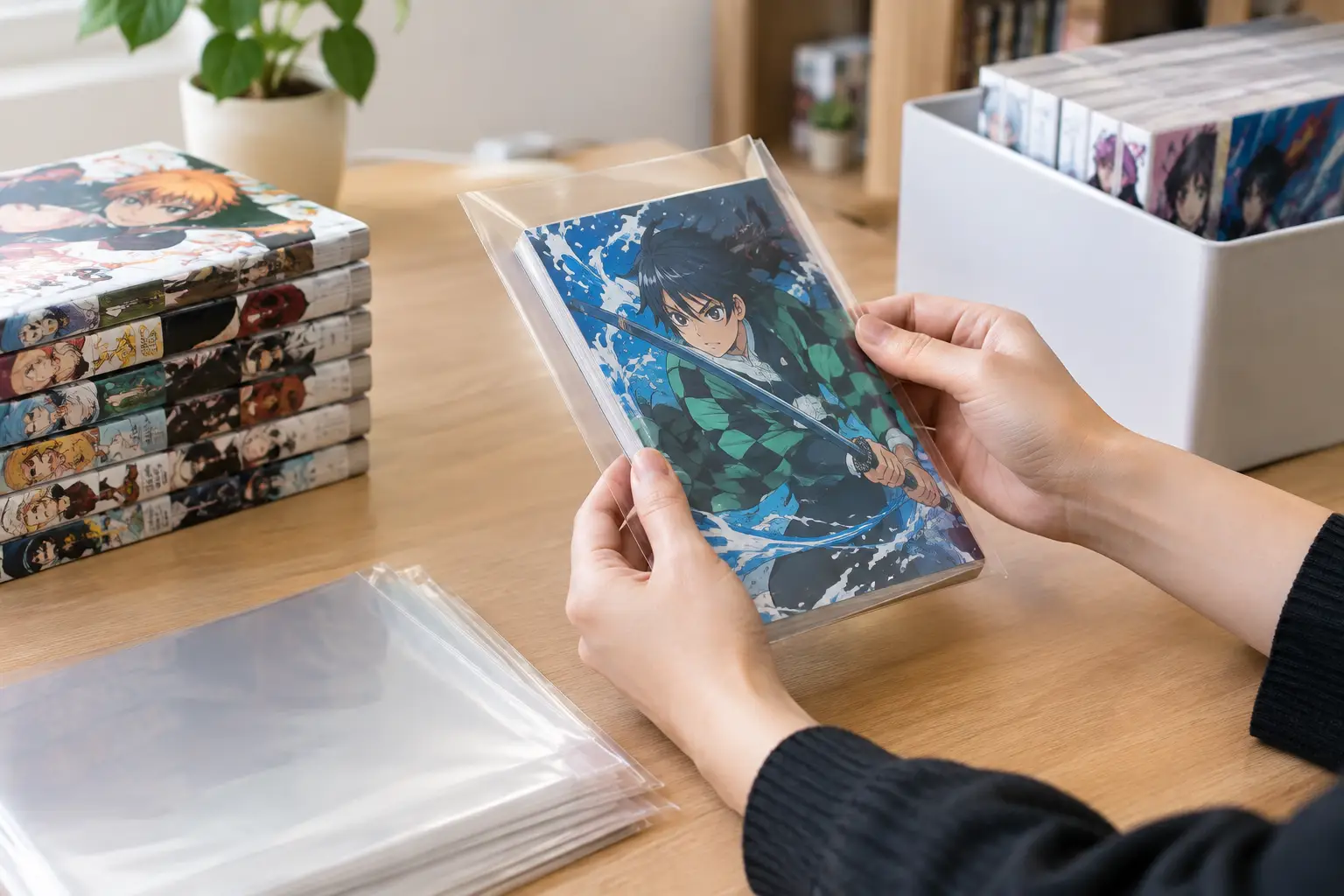
Clear protective bags are suitable for rare, signed or out-of-print volumes. They protect against dust, light scratches and fingerprints. They are not essential for a standard series that you reread often. There is no need to turn reading into a glove-wearing chore.
Choose PVC-free bags in the right size. A cover that is too tight bends the book cover, while one that is too large collects dust and looks untidy. Do not stick tape directly onto the book. Over time, the tape may peel away, lift the laminate, leave a sticky residue or damage the cover.
Boxes are practical for volumes that have no room on the shelf, but they must be dry, clean and not overfilled. Avoid cardboard boxes stored in a garage or basement—they easily absorb odors and moisture. If you are putting manga away for a longer period, arrange the volumes upright in a sturdy box. Do not leave so much empty space that they can fall over and knock against one another when moved.
Silica gel packets can help in a closed box when there is a moderate risk of moisture, but they do not replace a dry room. If the room is consistently damp, address the cause first. Do not rely on your collection to compensate for problems such as inadequate heating or a leaking window.
Read carefully to preserve the spine
The most common marks on manga volumes come not from the shelf but from the way they are read. Do not open a new volume all the way with one sudden movement. This strains the adhesive—especially in thicker editions—and leaves characteristic white lines along the spine of the paperback cover.
Support the book with both hands and open it gradually. Do not fold the cover back, even if that makes reading more comfortable for you. On some inexpensive mass-market editions the damage will be mainly cosmetic, but a mark like that is immediately noticeable on a collector’s series.
Do not use a pen, metal paper clip or thick object as a bookmark. A thin paper bookmark is the best choice. If you leave a volume open face down on a desk, you risk warping the spine and bending the corners, even if you do it carefully.
Wash and dry your hands before reading. Gloves are not needed for ordinary manga; sometimes they even make turning pages more difficult. Greasy fingers, hand cream and food, however, leave stains that are difficult to remove from matte paper.
Clean without risky experiments
To remove dust from covers, use a clean, dry microfiber cloth and gentle strokes. You can clean the page edges with a soft brush. Do not spray cleaner directly onto the book or use wet wipes, alcohol or strong cleaning products. They can smear the printing, leave stains or deform the paper.
If a volume has developed an odor, shows signs of mold or has had wet pages, do not put it among the other books. Isolate it so the problem does not spread to the rest of the collection. For a valuable or rare copy, professional advice is wiser than home remedies involving perfume, baking soda or a hair dryer.
Condition matters when buying, selling and trading
When buying used manga, look at real photos of the covers, spine, corners and page edges. Yellowing, light shelf wear and minimal scuffing are normal for older volumes. A loose spine, moisture, odor and missing pages indicate a different level of condition and should be clearly described.
If you are selling, be specific: state the language, publisher, volume number, whether it is a first edition, and whether it has creases, writing or yellowing. This kind of detail makes transactions in the collector community easier. On KPZ, a clear title and honest description help buyers know what they are getting and sellers find the right person for their series.
When shipping, put the volume in a protective sleeve or clean bag, place it between two pieces of stiff cardboard and fill the empty space in the box. If the manga can move around inside, it will almost certainly arrive with battered corners.
A small routine makes a big difference
Every few months, inspect the shelf: is there dust, have the spine colors changed, are any volumes leaning, or are there signs of moisture near the wall? The check takes minutes and can prevent problems whose repair would later cost time, money and hard-to-replace copies.
You do not need to keep your collection locked away to preserve it. Read your favorite series, show them off and enjoy them—just give them a dry place, a sturdy shelf and a little care. That way, the next volume you add will sit nicely beside the first.
Find it at KPZ
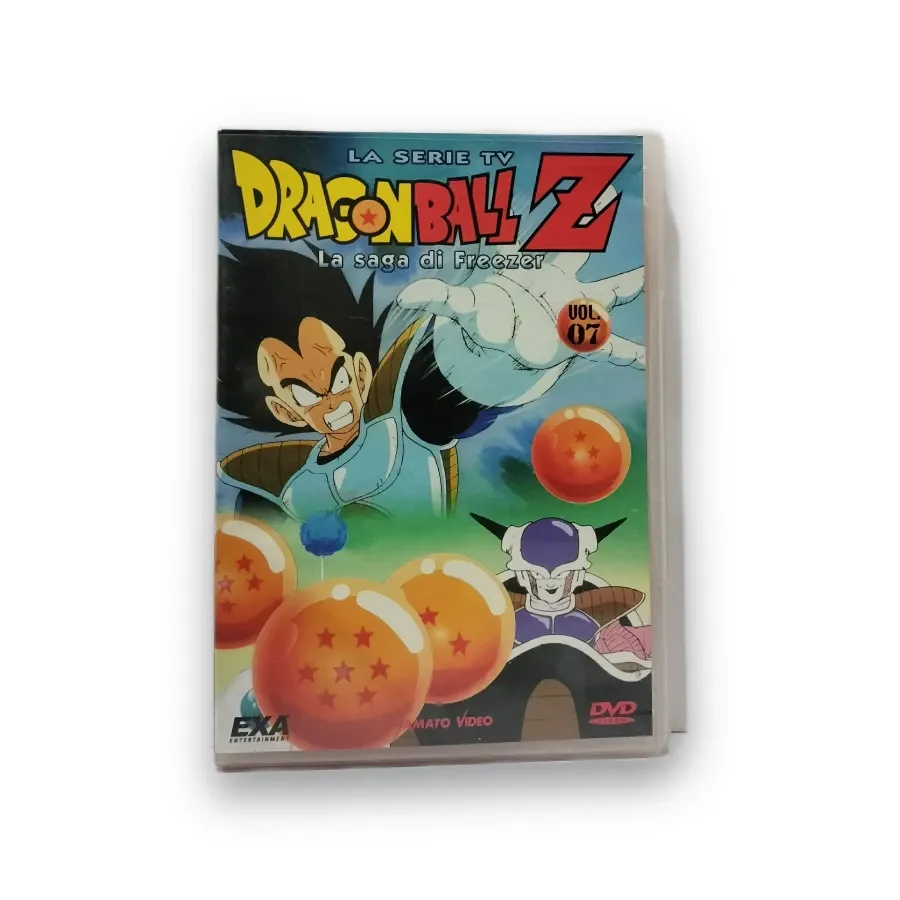
Dragon Ball Z: The Frieza Saga — Vol. 07 DVD
10,00 €

Bakugan Battle Brawlers for PlayStation 2 — PAL/EU
10,00 €

Vampire Knight: Memories, Vol. 1
7,00 €

Edens Zero, Volume 5: The Heart of a Hermit
8,00 €
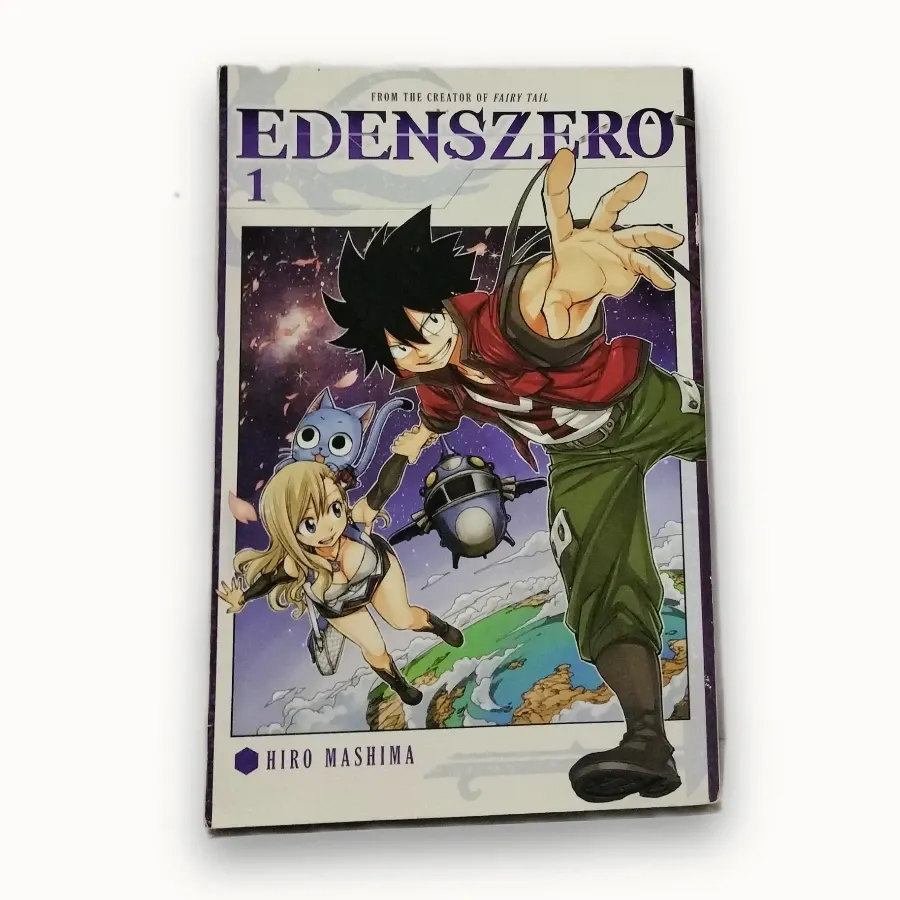
Edens Zero Volume 1 — Hiro Mashima
8,00 €

Edens Zero Volume 7 — Kodansha Comics
8,00 €

Yu-Gi-Oh! Blue-Eyes White Dragon Plush Figure
15,00 €
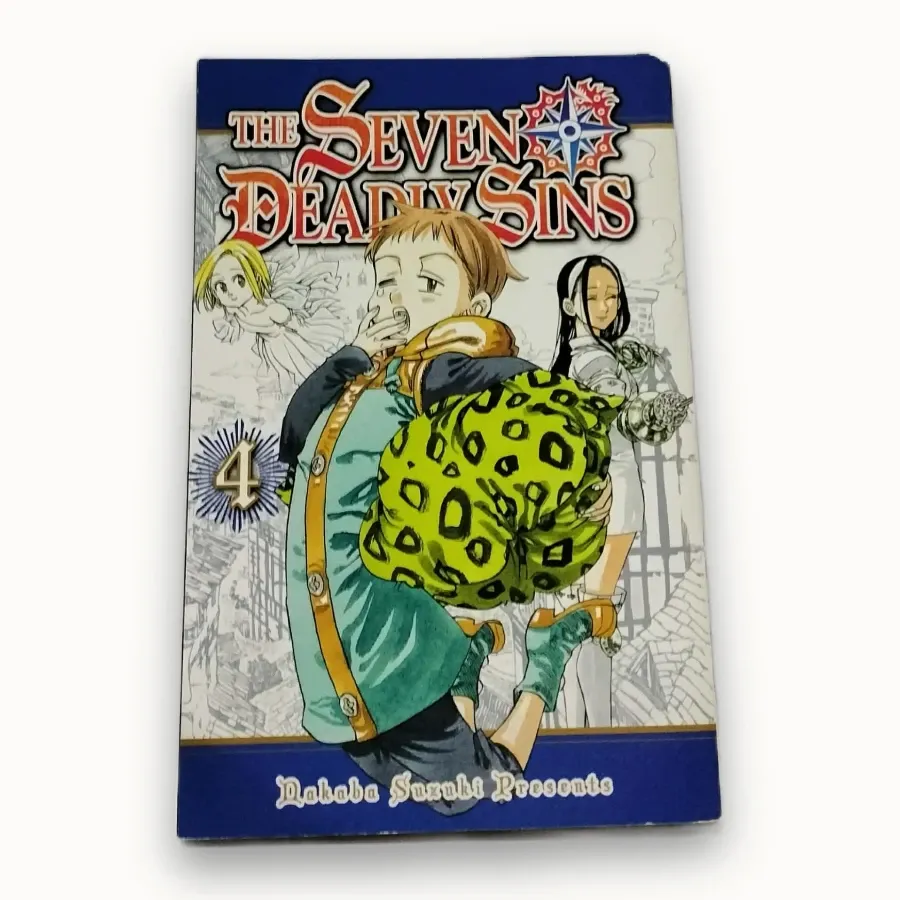
The Seven Deadly Sins, Volume 4
7,00 €

The Seven Deadly Sins, Volume 2: Sin vs Virtue
7,00 €
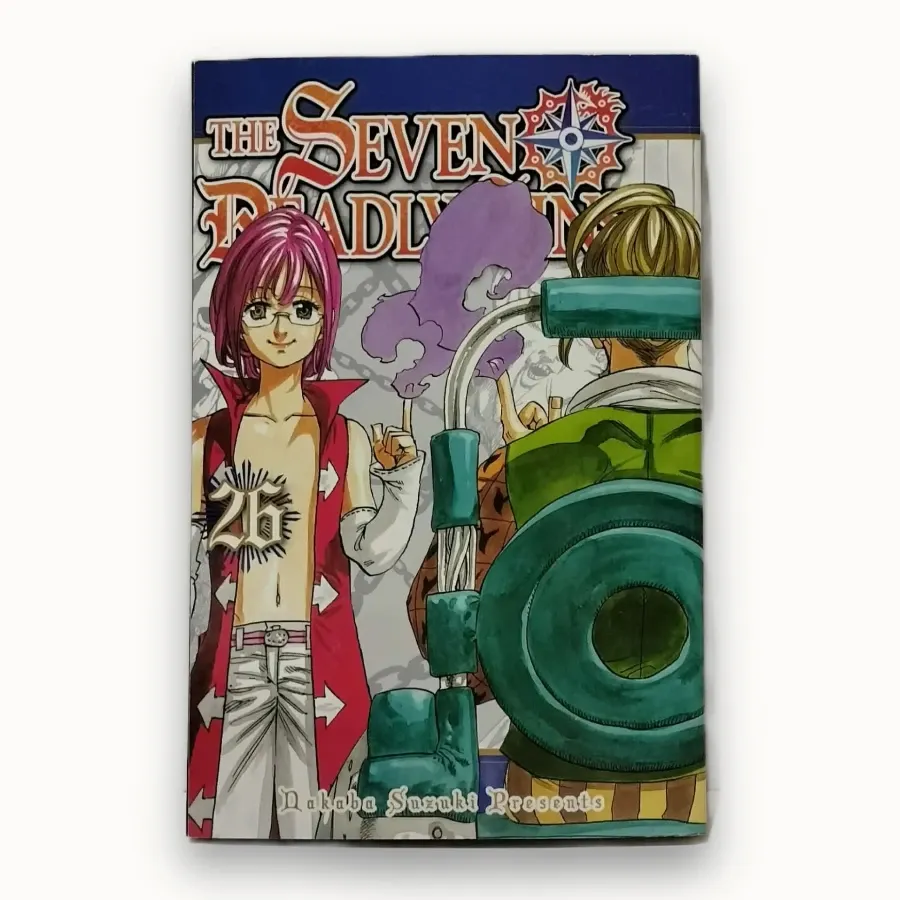
The Seven Deadly Sins, Volume 26
7,00 €